Rural community needs must be factored into transport plan for West of England region
Dick Whittington, WERN’s Rural Project Manager blogs about his experience of supporting rural community transport groups and the need for policy makers to actively involve local residents in designing solutions

Last year we asked rural community groups across the West of England region to tell us about the main challenges facing their area and how we could help. I don’t think anyone was surprised to see that transport was by far the number one issue mentioned.
Over the last 20 or more years, rural bus services have been cut back, leaving those people without their own transport increasingly disadvantaged. At the same time, many local services have shut – shops, doctors’ surgeries, and even pubs.
On the plus side, there are many community transport groups in rural areas who provide vital services, often operated almost entirely by volunteers. But these services are typically for distinct groups, such as older people and those with mobility problems, or in the case of volunteer car schemes, to help people get to medical appointments.
At WERN we are very involved with the community transport sector. We help to run Chew Valley Community Transport, a volunteer car scheme with more than 30 volunteer drivers and we also set up and run the West of England Community Transport Network with Voscur, the local support and development agency for Bristol’s Voluntary, Community & Social Enterprise sector.
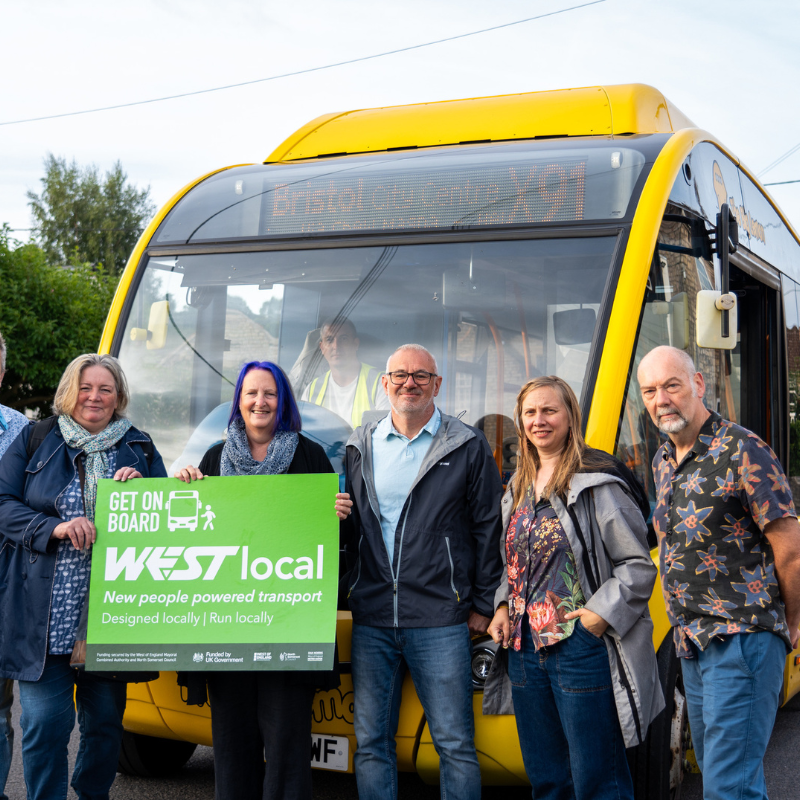
More recently, we worked with communities in the Chew Valley, and the Cotswold Edge and Charfield area of South Gloucestershire to help develop West Local, a rural bus service sponsored by the West of England Combined Authority using funding from the government’s Bus Service Improvement Programme. These are pilot projects where communities were invited to develop proposals for new services over a two-year trial period, with the possibility of longer term funding if successful. Some of the bureaucracy has been hard work, but the idea of involving rural communities is paying dividends, both by meeting local community needs, and by spreading the message and encouraging people to use the bus.
Community voice is really important – recently our ‘Y8’ service connecting Yate with the rural area was extended over the border to Wotton under Edge having worked with local residents to evidence their needs to access jobs and services in the town. Passenger numbers have gone up dramatically as a result, but it wouldn’t have happened without community support and lobbying.
So the message is that community involvement is essential if we are to develop sustainable local transport solutions. We are keen to work with communities and with local authorities to take this forward over the next few years, and we’d love to hear from you.
------
You can find out more about rural transport access by reading our Chief Executive’s blog.